
Guide + video course
Bonsai for Beginners
Growing & Styling Guide + Video Course
A step-by-step guide to growing, shaping and caring for your first bonsai, with video lessons that show each technique in action.
Upload one photo. Our AI bonsai assistant identifies species, branch structure, and trunk lines, then applies classic bonsai techniques to your tree: step-by-step cutting and shaping wire instructions, branch by branch.
Species ID, style choice, and a pruning & wiring plan from a single photo
Tap to upload a photo, or drag & drop here
Supports PNG, JPEG, or WebP
Select photo from deviceHow It Works
No bonsai experience needed. The plan explains the botanical reasoning behind every cut and bend before you touch shears.
Nursery stock, garden shrub, or a bonsai you already own. One clear side photo of the whole tree is enough to map branches.
Species, age, health, and trunk line are analyzed. The engine matches the classical Japanese bonsai style that best suits that exact specimen.
Receive annotated images showing what to wire, which branch to prune, and which foliage to keep to reach your tree's best future form.
Our Books
Two beginner-friendly bonsai books: a growing and styling guide with a video course, and answers to the 101 questions every grower asks.
Guide + video course
Growing & Styling Guide + Video Course
A step-by-step guide to growing, shaping and caring for your first bonsai, with video lessons that show each technique in action.
Questions & answers
Clear answers to what every bonsai grower asks
From watering, soil and repotting to pruning and wiring: 101 common bonsai questions, each answered simply so you can care for your tree with confidence.
Example Result
A clear diagnosis, a chosen style with the reasoning behind it, and an annotated plan you can act on today.
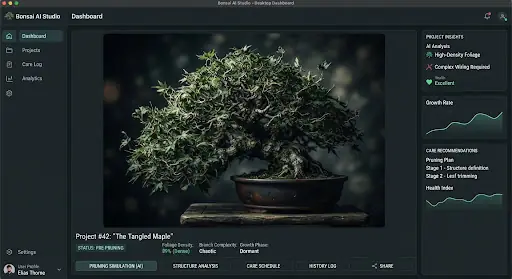
Untrained stock, before any work
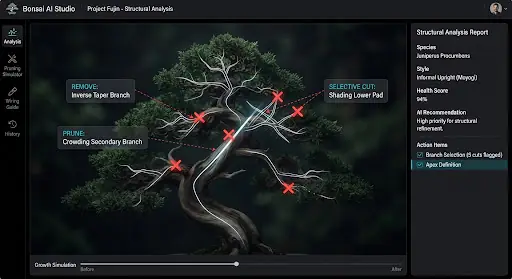
Cut, wire & keep markings
“The trunk already has gentle movement and good taper. Opening up the crowded upper canopy will reveal its natural line.”
Bar branch runs parallel to Branch 2 and confuses the silhouette.
Wire and lower it about 15° so it follows the trunk's movement downward.
Balances the curve and becomes the primary crown pad.
Illustrative example. Your result is generated from your own photo.
Bonsai Marketplace
Trees from fellow enthusiasts and nurseries. Every seller and every bonsai is checked by our team before it is listed.
Bonsai Techniques
Almost every bonsai design comes down to two core skills: knowing which branches to cut and when, and using bonsai shaping wire to place the branches you keep. Here is how both work, and how the AI applies them to your tree.
Pruning decides the tree’s structure. Use clean, sharp tools (a concave cutter, knob cutter and bonsai shears), never remove more than about a third of the foliage at once, and time each cut to the species.
The big decisions: remove crossing branches, bar branches (two at the same height), branches growing back toward the trunk, and anything that hides the trunk line. On deciduous trees, cut flush with a concave cutter so the wound rolls over cleanly; on conifers, leave a short stub that can later become deadwood (jin).
Let new shoots extend, then cut them back to one or two leaves or nodes. This keeps the silhouette tight and builds fine ramification. Use sharp bonsai shears on junipers rather than pulling the tips, which browns the foliage.
Shorten or remove the new spring candles to balance strength between strong and weak areas and keep needles short. In autumn, pluck old needles so light reaches the interior buds.
Removing some or all leaves on vigorous deciduous trees such as maples and elms triggers a second, smaller flush. Never defoliate a weak tree or one repotted the same year.
Comb out the root ball and trim long, thick and circling roots by up to about a third, keeping the fine feeder roots that drive new growth.
Wiring puts movement into the trunk and branches and sets each one where it should grow. Wire conifers from autumn to early spring, and deciduous trees in late winter or once spring leaves have hardened.
Anodized aluminum is soft and easy to reposition, ideal for deciduous trees and beginners. Annealed copper holds more strongly with a thinner gauge and is the classic choice for pines and junipers.
Use copper wire roughly one third the thickness of the branch, and aluminum a little thicker. If the branch springs back after bending, step up a size or apply a second wire alongside the first.
Anchor the wire on the trunk or by wiring two branches of similar thickness with one piece, then coil outward toward the tip at about a 45° angle, snug against the bark but never biting into it.
Bend on the outside of each wire coil while supporting the branch from underneath with your thumbs. Make the shape in one smooth movement; repeated back-and-forth bending cracks the wood.
Check the wire every week or two during the growing season. Cut it off in short pieces with wire cutters rather than unwinding it, as soon as it starts marking the bark. Rewire later if the branch springs back.
Go deeper on bonsai techniques
Bonsai Styles Taxonomy
Good bonsai design starts with choosing a style that the tree already suggests. You work with the trunk line you have, rather than fighting against it.
Formal upright
A perfectly straight, evenly tapering trunk with the apex directly above the base. Branches alternate left, right, and back, getting shorter toward the top.
Informal upright
Most versatile & common style. The trunk moves in gentle curves, but the apex still sits directly above the base. Branches grow from the outside of each curve.
Slanting
The trunk leans at roughly 60-80° from the ground as if shaped by constant winds. Strong roots on the opposite side anchor the lean safely.
Cascade
The trunk grows down past the pot rim, with the tip falling below the base of the pot, mimicking trees growing on steep ocean cliffs.
Semi-cascade
The main trunk extends sideways past the rim but does not drop below the bottom of the pot. A gentler, more horizontal version of cascade.
Windswept
Trunk and branches all sweep to one side, telling the dramatic story of a tree that survived constant winds on a harsh mountain ridge.
Literati
A tall, slender, often twisting trunk with very little foliage, all of it near the top. Minimalist and expressive: the naked line is everything.
Broom
A straight trunk that divides into many fine branches at one height, forming a rounded umbrella-like crown. Classic for deciduous trees.
Not sure which bonsai style fits your raw material?
The AI assistant reads trunk curve, apex balance, and root flare to match the style that suits it best.
Bonsai Care by Species
Pruning times, wiring methods, and repotting cycles differ a lot from one species to the next. Here are the essentials for six of the most common trees.
Seasonal Care Guide
From the Journal & Blog
Explore pruning principles, wiring mechanics, health diagnostics, and seasonal care, step by step.
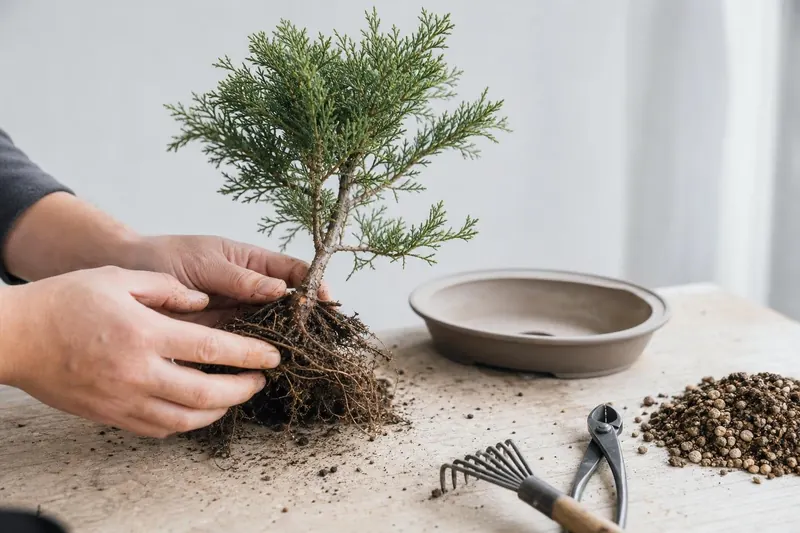
Most great bonsai started as an ordinary nursery plant. Here is how to pick a good one and turn it into a bonsai, step by step.
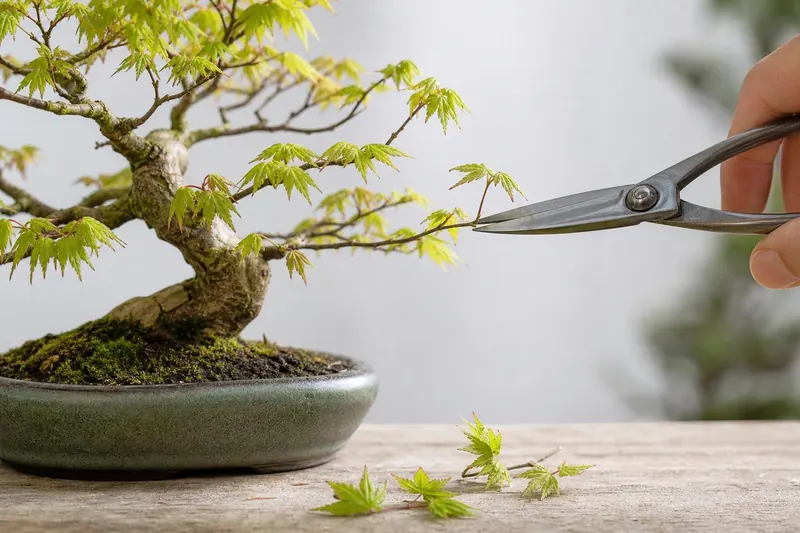
Prune at the right time and a bonsai rewards you with dense, healthy growth. Prune at the wrong time and you can lose branches. Here is the timing for each type of tree.
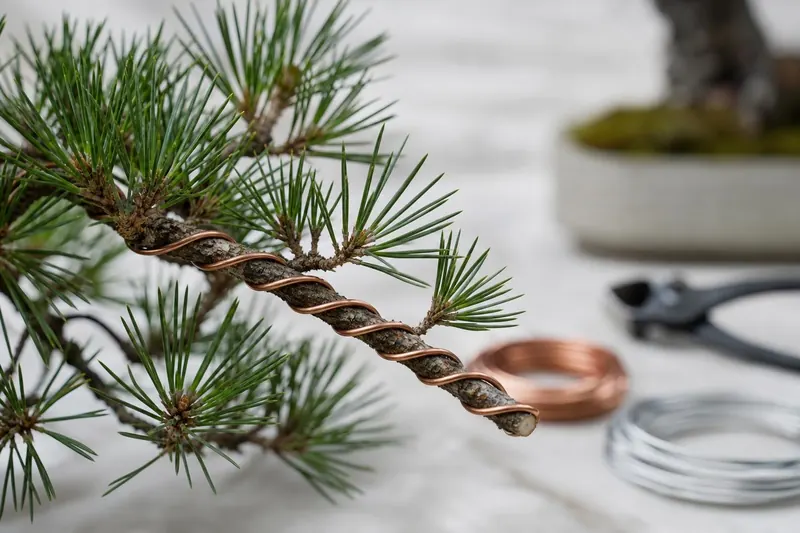
Wiring is how bonsai branches get their shape. Here is the technique, wire sizes, timing and the mistakes that leave scars, explained step by step.
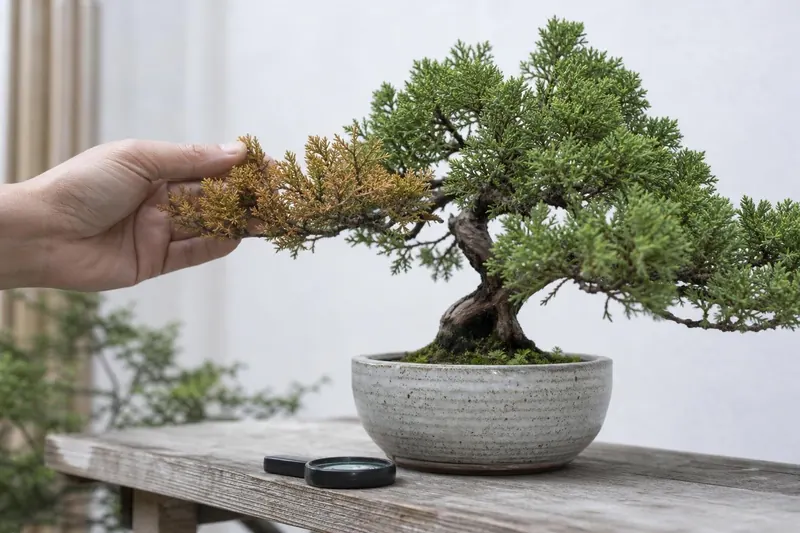
Brown foliage on a juniper is a warning sign, but not always a death sentence. Here is how to find the cause, check whether the tree is still alive, and nurse it back.
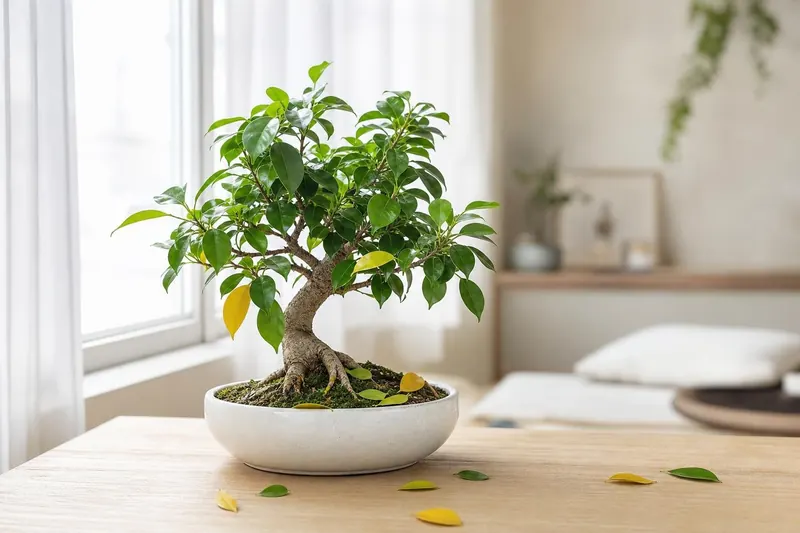
Ficus are tough, but they drop leaves at the first sign of change. Here is how to work out what triggered it and get your tree back into full leaf.
Frequently Asked Questions
Everything you need to know about the analysis, the plans, and your photos.
It is a tool that looks at a photo of your tree the way an experienced bonsai artist would. Bonsai AI Studio identifies the species, assesses health and structure, picks the bonsai style that suits the tree, and gives you a step-by-step pruning and wiring plan with a preview of the result.
Yes. Bonsai tree identification is the first step of every analysis: the AI names the most likely species from the leaves, bark and growth habit in your photo, and estimates the tree’s age and health. A clear, well-lit photo of the whole tree gives the best result.
No. Most bonsai start as nursery stock (pre-bonsai) or a shrub from the garden. The AI tells you how much bonsai potential the tree has and how to get there.
Chinese elm, ficus and juniper are the classic beginner bonsai. Ficus and Chinese elm are very forgiving and recover quickly from pruning; ficus also does well indoors. Junipers are tough and easy to wire, but must live outdoors.
Heavy structural bonsai pruning is usually done in late winter or early spring, before buds open. Maintenance pruning (pinching and trimming new shoots) happens through the growing season. Exact timing depends on the species, which is why the AI identifies the tree before planning any cuts.
The core bonsai cutting techniques are structural branch pruning (late winter to early spring), maintenance trimming of new shoots during the growing season, candle pruning for pines, leaf pruning on healthy deciduous trees, and root pruning when repotting. Use sharp, clean tools and never remove more than about a third of the foliage at once.
Bonsai shaping wire comes in two main types: anodized aluminum, which is soft and forgiving and suits deciduous trees and beginners, and annealed copper, which holds more strongly and suits pines and junipers. Choose copper about one third the thickness of the branch, and aluminum slightly thicker.
Use wire about one third the thickness of the branch, anchor it, coil it at roughly 45°, and bend slowly while supporting the branch. Check it every week or two and remove it before it cuts into the bark. Your plan tells you which branches to wire and in which direction.
It follows established bonsai techniques and explains the reasoning for every cut, but it is AI guidance, not a guarantee. Before heavy pruning, check the timing for your species and climate.
Your photos are used to generate your plan and appear only in your own project history. Deleting a project also deletes its images.
Sign in with Google and your first full plan is free. After that, add $5, $10 or $20 of balance and spend it as you go. There is no subscription.
Upload a photo and see its bonsai future in about two minutes. Your first plan is on us.
No credit card required • Sign in with Google
